Showing posts with label Hangar Door in India. Show all posts

Monday, October 22, 2018

Fabric Hangar Doors


fabric hangar doors

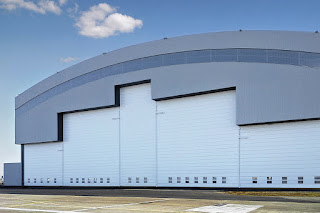
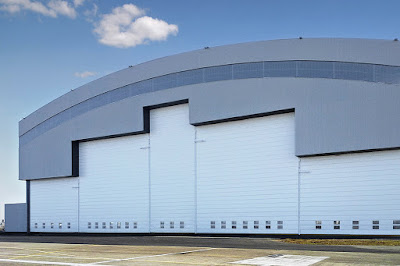
Fabric hangar doors are automated doors specifically designed for areas where there is no room to slide on the side of the door opening. This type of door eliminates the need for a heavy foundation under the floor rail door. The door goes up and down in an aluminium guide with brush seals. It works by lifting the soil section upwards and stacking the intermediate sections on top of each other. The fabric is folded in folds on both sides of the door.


main characteristics

  • No slides on the floor
  • No clear opening restrictions
  • Maintenance free
  • Wind resistance - doors withstand high wind loads
  • Resistance to rust - doors are corrosion resistant
We manufacture customized and long time durable t-hangar doors, bifold hangar doors, hydraulic hangar door from galvanised steel material. 

To install hangar door contact:
1st floor, G block, Thermax Chowk,
Above Renault Showroom, MIDC,
Pimpri-Chinchwad, Maharashtra 411019

Saturday, August 25, 2018

Multi-Leaf Sliding Hangar Door/ Sliding Hangar Door

hangar door systems

The Nihva Aircraft Sliding Hangar Door is recommended where there is no free space and allows lateral clearance. This type of doors can be either double-jawed or unidirectional with each section of the rolling door bottom and the top oriented. The rolling lower hangar door is an excellent application for any pre-designed or custom facility. It is a "rolling downside", meaning that its weight is carried by a bottom rod rather than the structure of the building above. These doors are designed to withstand wind load standards and protect the interior of all types of weather due to the advanced weather seal system. The weather seal system also increases energy efficiency. Rear doors and built-in pedestrian doors can be integrated without a doorstep.

Main characteristics of the hangar door
  • Rolling steel bottom rolling construction, sliding door
  • Modern driving systems with easy to use controls
  • Customised with the Multiple security devices
  • Heights ranging from 10M to 40M and Custom width
  • Unlimited selection of cladding, glass, colors, and configurations
  • Full weather sealing
  • Glazing choices are available
  • Wicket door for staff entrance/exit access
Click here to Download hangar door specification

Thursday, August 23, 2018

Hangar Door/ Aircraft Hangar Door


hangar door system
The hangar door is designed by Nihva technologies especially for the harsh environment with very large openings. The hangar door and the ship gate are available in two types:
  1. vertical lifting door
  2. sliding doors
Both provide great versatility for versatility and are suitable for aircraft and ships of various sizes. Optimal reliability and operational safety are important design principles during the design and installation of hangar doors.

We work closely with design engineers, contractors and owners and create a system that meets your precise desires or can be modified to meet the requirements of the existing structure. Sliding hangar doors are recommended for planes where there is no free space, and lateral approvals allow, while vertical lifting doors eliminate the need for a heavy foundation under the door for lower tracks. The hangar door system is built to withstand tremendous wind loads and resist harsh weather conditions. The stable operation is maintained due to the quality of working assemblies.

View Products:
http://www.nihva.com/sliding-doors.html
http://www.nihva.com/hanger-doors-extra-large-opening.html

Wednesday, August 1, 2018

Bottom Rolling Hangar Door

A well-designed hangar door system will remain functional under conditions that prevent other structures from moving. Strong winds, heavy snow and power outages that interfere with other structures are easily overcome by a high-quality rolling door.


Characteristics

A high quality bottom rolling hangar door is the strongest and most reliable door systems ever.


Design options:

  • Flexible and easy to customize for virtually limitless design options.
  • Unlimited size, maximum insulation, truck doors, pilot access doors, inner tubes or filter benches, hatches, fairings, glazing, rear panels, unlimited options.
  • Manual doors are operated unlike electric motors to reduce complexity and cost.
  • Electric motor operators can be integrated into your system to meet your specific needs.
Other Benefits:
  • The lowest life cycle cost for any design.
  • Flexible operation of the panels. The panels do not require any force to move them.
  • Long life components requiring very little maintenance.
Bottom Rolling Door Types


All Moving Panels


One configuration of bottom rolling hangar doors is referred to as All Moving due to the fact that the panels are not restricted which direction they slide and are individually operated. This configuration of the hangar doors is generally chosen for applications requiring maximum flexibility in larger hangars, allowing multiple aircraft without the use of stacking pockets. Just move all the panels to the side of the shed that does not need to be open. In northern countries, all mobile configurations may require heated rails.

All hangar doors can be equipped with a variety of options to suit your needs. The doors can be operated manually or with an electric motor. Manual operation is popular in this configuration due to the fact that the operator does not have to push all panels at once and can push one at a time which is almost effortless. If the panel is chosen to be electrically motor operated, the price tends to be a bit more expensive than the other configurations. Each panel is fitted with a motor and control panel and power is fed to each panel through trolley duct feed system along each rail. Other options are recommended with that option such as safety edges along both edges and limit switches to prevent collisions at each panel.

Single Stacking Panels

Simply stackable, bottom sliding hangar doors that can be installed on virtually any type of building to save money and space. Single-stack door system have been specified for aircraft hangars, T- hangars, industrial and agricultural buildings and even for floating barges! When operated manually, these doors slide in the same manner as all moving doors, except that they close in one direction and open in the opposite direction. They "stack" at one end, which is recommended to be a wing wall or section built outside the building to store the doors while the full width of the shed is used for opening. In cases where space is not available on both sides of the opening, a wall is needed to stack the doors with the door open.

Bi-Parting Panels

The last configuration of the bottom rolling hangar door is a very elegant design when space is not a problem. This configuration of the door strikes in the middle and half of the panels open on one side while the other half is open on the other side. This design requires an even number of panels and can be operated manually, but is usually electrically powered, which means that two motors are needed; one for one half and one for the other half. This configuration has the same stacking requirements as a single stack configuration, but for both sides. Be prepared to give space to these doors. This configuration really works very well to reduce the space in and out of the building. An example is that instead of 6 panels on their own separate rails, they can now be placed on 3 separate rails, saving the space that would be used by the other two rails. This is a game for some hangars owners.

Multiple Leaf doors

Named partly because of its working principle. In Southern countries, The rails are protected from ice and snow in cold weather by a pocket built into the building that keeps the rails protected. Rails are also protected by the physical orientation of the stack of panels leaving no exposed rails in the closed position.

The rail layout only affects the location of the rails in respect to the building, a Northern layout can be chosen for Biparting and Single Stack configurations.

Southern Rail Layout

Named partly because of its working priciple. The rails stay outside of the buildings' walls because snow and ice are not as concerning in the south and the face that the panels are on the exterior of the building allow more space to be utilized for the customer.

Solar Powered Electrically Operated Doors

In some configurations, power rolling hangar doors have unique power and control issues, which has solved these problems with our "solar option". The solar panels are properly sized and installed in the outer skin or door siding. Plate energy charges a battery installed in the door. The battery bank provides an uninterrupted power source for the motor that opens or closes the door. The door is functioning normally, even if the supply of the rest of the building is cut off! This solar option is available on all different models of new doors.

Tuesday, April 24, 2018

Aircraft Hangar Doors Construction Manual Part - II| Hangar doors

In the second part, you will learn about the scope of this hangar development, exploring alternative approaches and the financial implications of each estimate. They analyze conditions, analyze stakeholders, find key decision-makers and create a formal business plan.

If you have found the right approach, create a SWOT analysis (see right).
Explore options

There are a number of approaches to building aircraft hangar doors. Each has its advantages and disadvantages, so you should consider the options to determine which one is the best.  

We believe there are 3 main decisions:
  • A private company seizes the land on a lease of more than twenty years and leases the sheds to the tenants.
  • Private developers have been seizing land for a lease for over twenty years and renting sheds to tenants.
  • The airport owns aircraft hangars and rents them to tenants. 
Benefits of Private ownership vs. Airport ownership: 

Private ownership
  • No external investment required.
  • No owner management required
  • Treat with a person.
  • No risk of occupation. 
Airport ownership
  • Strong demand
  • High turnover rate
  • Build according to your own specifications.
  • You can ensure compliance with the laws and rules of the airport. 
Disadvantages of Private ownership vs. Airport ownership: 

Private ownership
  • Limited control over the lease or increased rent. 
  • Impairment of assets.
  • Managing the Hangar queue can be problematic. 
Airport ownership
  • Management control of the owner of the airport required.
  • Perhaps the highest capital costs.
  • Maintenance costs come from airport budgets.
Generate money
sliding hangar doors Installation
The generation of money is the main goal of all general aviation airports, it is often the best approach to finance the airport owner to build a hangar project and manage. If the owner is not in favor, finding a private source of financing, construction and operation is the most attractive alternative. The key will be your financial analysis.

Financial impact

After considering alternative approaches, it is important to assess the financial impact of each on airport operations. Record the financial history of the airport operations, note the impact of the new hangars and project the result.

You need to get budget estimates for the different alternatives you examined in the previous step. Review revenues, operating costs and capital costs/loan commitments. Remember to consider estimating the increase in fuel sales (and other miscellaneous items that would increase) based on the number of aircraft at the airport. A cost-effective source of such information can be obtained from previous projects in your airport or at nearby airports, adjusted for inflation and perimeter differences. Use an airport consultant or engineering office to make budget estimates.

Once you have gathered the relevant information, run the financial projections for at least 10 years making adjustments related to operating expenses and income inflation. During this 10-year period, you will likely see that existing loans can be fully disbursed, creating the potential for positive cash flow and other benefits. These must be documented in the final business plan to justify the project.

Hangar door on the new airplane hangars construction

SWOT analysis of aircraft hangar doors construction

SWOT analysis for aircraft hangar doors construction
The purpose of determining the strengths, weaknesses, opportunities, and risks of the project (SWOT) is to discover the impact that will have your hangar doors project for airport stakeholders. It is useful for a group of project developers to work together on SWOT analysis and interview key decision makers or stakeholders. This helps to detect potential problems faster than doing it alone. In general, you will discover things that you can use to your advantage or issues that you can address in the early stages of project planning to limit potential negative impacts.

Once the SWOT analysis is complete, you will have a better idea of ​​where to focus your energy to convince decision-makers and other stakeholders to support the project. If you are lucky, you may not be very worried about it, but it is better to protect yourself from the weapon

Strengths
  • History of success
  • A waiting list of aircraft hangars is full.
  • Support local people, city, and country.
  • FAA funding is available.
Weakness
  • The airport manager has limited experience.
  • The resistance of the tenants.
  • Lack of support from the owner.
  • Neighbors resist.
Opportunities
  • Provides increased revenues for the airport.
  • Customers more satisfied with the airport.
  • Increased business opportunities for airports.
  • Improvement of transport 
Threats
  • Obstacles of current tenants.
  • The resistance of the community.
  • The financing of the airport is managed by the Congress.
  • The developer has conflicting interests.
Boundary conditions  
These are nothing but the circumstances surrounding the project. They determine what is connected and what is not. Each project has limits that you can not modify or modify. If you find them during your planning phase, you will save time and money.
  • FAA and state funding
  • Architectural designs must be reviewed and approved.
  • The city must confirm the project plan and contract award.
  • Leases must be negotiated with some current tenants at the airport.
  • Neighbors must be involved in the communication.
  • Airport restrictions for hangar design.
  • The owner does not provide a source of funding (so he has to be self-financing).
Once the boundary conditions have been identified, you may find other issues to consider when developing the business plan and stakeholder relations during project implementation. It is crucial to know who the decision maker is, by whom or by which group You need approvals and if this changes at different times of the project. 

Perform a stakeholder analysis

An actor is a person or group who has been or will be affected by the hangar project. Once you have identified the stakeholders, you need to define their support levels. This helps you to control the acceptance and commitment of your project, as powerful allies can influence those who show little support.

Note that stakeholder analysis is likely to change over time as issues are resolved or new stakeholders are identified.

Create a business plan

Even if you do not have all the problems described in this guide or need to create a complete business plan for your decision makers, you should always follow these steps. A business plan will help you throughout the project, helping you work more efficiently.

Aircraft Hangar Doors Construction Manual| Hangar doors

Hangar Doors Construction Guide

Before you build a hangar, you must evaluate the current state of your airport or fleet, its operation and the feasibility of building a new hangar door. This includes the qualification of demand and requirements for aircraft hangars, assessment of the environment in which the project is carried out and assistance to key decision-makers. You should also familiarize yourself with the requirements of the FAA and the regulations governing the development of the airport and the construction of aircraft hangars.
Planning is the key
Before going any further, identify the key personnel who can help you. These people could include:
  • airport managers
  • Representatives of the city
  • Airport engineers
  • airport consultants
  • the local organization of the EAA
  • other hangars owners
http://nihva.com/hanger-doors-extra-large-opening.html

Research is the key

Start with an inspection of the waiting list of the aircraft hangar. If your airport does not have one, determine if you need a hangar space. Connect with those who show interest, learn about their commitment and plans for the future, and how much they are willing to spend. This is your market research. Is she interested in other places? Some people have their names on multiple waiting lists throughout the state. Do you own a plane right now? However, you decide to qualify these people, it must be verified.

Another way to gauge people's interest in a hangar waiting list is to request a financial contribution for each listing.

The type of hangar depends on your tenants and what is best in your airport. For example, interlocking T-sheds attract tenants because they offer the best weather protection for the least possible return. Coffered sheds generally attract owners with more money and bigger planes. These sheds are often more expensive to build, but they also generate significant revenue and should take much longer. Box sheds can also provide car washes, a conference room or a room for repairs and revisions of Hangar doors construction.

Planning is the key
Hangar doors construction Make sure to speak with local tenants, the airport manager, local EAA, etc.

Elements to consider
The search for the environment in which you want to build is probably the most important element that can be overlooked. Airport supporters often believe that development will be easy and successful when the demand for space in aircraft hangars is high. Not always! Before looking for financing, you must search for all the items at the airport. These elements include:
hydraulic hangar doors
Support for airport owners: If you do not have the support of the airport, you will fight in a fierce battle. Whether it's a private or public airport, you'll need your help and support to succeed. We recommend that you identify key decision makers early and present yourself and your plans for building hangars. They will need their support to make favorable decisions! Key people to reach the airport manager, planning department, and city or county members. If an airport commission exists, please contact them!

Community Supporters: If the community does not support your project, it will be much more difficult. If the airport was good for the community in the past, you should feel comfortable with them. Do not accept it simply because your ideas do not contain any complaints from the community you have supported. Check with online forums, local newspapers and local residents to find out what people think about your plans.

The Airport Master Plan: The airport should have a current FAA approved master plan, and show the airport's ability to develop and plans for completion. It also shows an airport layout scheme. It is important that your aircraft hangar project be highlighted in this management plan during the planning phase.

zoning or land usage: The airport or city will have a plan from which to develop its own airport. Some areas will be available for aircraft hangars, others for commercial development, gas, combinations, etc. Some should be listed as permissions and should be free of any development or design. If there is not yet an area to develop a hangar, you must contact the airport manager. AOPA will also be a useful contact: Talk to your Noise and Land Department.

Design Standards: Design standards do not apply to any airport, so you should know. Some airports will have preferred architects and engineering offices for aircraft hangar projects. These companies will know the size, shape, design, door styles, etc. You should get contact information from AeroDoors at a very early stage to make sure the right door choice is made. The airport manager may have a list of "favorite design agencies".

Tenant Support: Although the waiting list in the hangar of the aircraft can wait for you to finish your development, others may not show the same enthusiasm. For example, an existing hangar developer at the airport can see you as a threat. It is important that you determine the competition and ask for the opinion of others. You should know what support you need to overcome the competition.

Availability of funding: Existing airport revenues will be the main source of funding. Examples include state aviation, municipal bonds or private loans. Take a look at the FAA Airport Improvement Program.

For more information about hangar doors, hydraulic hangar doors, sliding hangar door installations fell free contact Nihva Technologies Pvt. Ltd.

Friday, April 20, 2018

Manufacturer of Aircraft Hangar Doors

hangar doors
If you are having trouble finding a reliable and competitive installer for hangar doors and folding doors, we can help you. With our extensive experience in the door automation and aerospace sectors, we have the know-how to offer you the best execution and the best price for your next Hangar project.

Nihva Technologies Pvt. Ltd. specializes in the following installation services:
  • All Types of Airplane Hangar Doors
  • Hydro-Lift, Sliding, Stack, and Bi-Fold Doors
  • extra large opening doors, sliding / folding doors, mot. rolling shutter, entrance-exit access systems
  • Commercial Garage Doors & much more
  • Specialize loading/unloading bay, dock levelers, dock shelters/dock house, wireless automation, scissor lifts, goods lift, telescopic conveyors, battery operated mob crane, automatic roofs
  • We proudly service Commercial as well as Industrial door automation solutions
We’ve recently completed more than 500 small and large scale door automation projects in India.

Owner: Vijay Tarak

Tuesday, February 14, 2017

Hanger Door in India


Nihva are recognized as one of the trustworthy suppliers of Hanger Door in India. These doors are made of quality materials and advanced technologies in different sizes, weights, patterns and dimensions. Our installed door range is rigorously tested by our quality controllers on various quality parameters to ensure the best possible delivery of the product to our customers. Hanger door is idyllic for use in garages, shops, shopping centers and other commercial spaces.

Hanger Door in India
Hangar doors in India
Characteristics:
  • Robust construction
  • Reduce Downtime
  • Low operating costs
Nihva Technologies are Leading Hangar Door provider in India and provides best High speed doors, Sectional doors,Fire rated doors, Sliding doors and Hanger Doors in India.